Tuesday, September 24, 2013

See Boges fish

This guy, hard at work at the daily take your dog fishing day:

At the cutthroat lake...
and in the wilderness...
on the Yellowstone...
and at secret creek...
Researching an article...
and corralling grayling...
with Liz...
During skwalas...
Harassing the guide...
and fish...
"Do, you, want ..." 
"...to chase some ducks?"

For hoppers on the Missouri...
...or runoff on the upper Madison...
...or Christmas on the lower Madison...
Always "helping" me land.
Trudging through the hopper grass (see it?)...
...and when it's too cold to fish...
... and just barely warm enough.
Just a pup, taking to the locals....(that's him ^ ;))
Even just fly tyin'...
Before I knew how to fish ...
Spotting rises on Fairy Lake...
Hunting predators...
Sniffing out the neighborhood drakes...
Overlooking the Gibbon...
For mahogany duns....
Rain, sleet, or snow...

My dog is there.

Friday, September 20, 2013

Falling

Rivers rose and temperatures fell.
Fish rose and rain fell.
Grasshoppers die while big orange sedges hatch.
Fisheries open as summer closes.
Hebgen trout migrate while colored leaves fall.
Mornings need sleep, noon needs fishing.
The 90-degree sun has set behind the snow-capped ridgeline.


Rod tips rise and stress falls.

Autumn begins Sunday.


Thursday, September 5, 2013

Luxuries of a boat bag

Are boat bags essential fly fishing gear? No. Are they extremely nice when fishing from a boat? Yep. And every bit of ease, comfort and happiness counts to this crotchety angler.

Right here ^
It snugs up nicely beside a cooler bag in between the cross bars of an Outcast PAC 1300,
beneath a soft dry-fly cast on the Yellowstone River.
They easily stand upright in a boat (unlike backpacks, etc.), protect your gear with hard sides, provide easy access in a boat, are easy to load and unload with their top-mount handles. So I got one.

Sage's Technical Boat Bag is handsome, durable and accommodating. It holds a full inventory of gear:
  • rain jacket
  • map book
  • five or six fly boxes, and a couple more fly-shop cups
  • a couple bottles of floatant
  • a couple tins of split shot
  • a few indicators
  • a Garmin unit
  • a good-sized first-aid kit
  • lip balm
  • sunscreen
  • long-sleeved shirt
  • water filter
  • a few granola bars
  • some plastic bags for dog poop or whatever
  • small MILC camera and extra lens
  • spare AA batteries
  • Raft repair kit
  • Forceps with tippet caddy and nippers can attach to any of a number of exterior tabs
  • Miscellany like salmon-steelhead poly leaders, old leaders for streamer fishing, mini camping-storage bags, etc.
All fits with aplomb and there's still room for a water bottle.
Perfect for a WaterMaster, too. 
I noted some minor issues, like the absent bag-top handle. Lifting it into the boat requires one little extra step - cinch down the shoulder strap to be used as a hand-handle. Absolute minutia, but something. It does have hand handles on either side, on top of the side pockets (two hands usually required). It also has accoutrements like a big Velcro-able fly patch and a cover leaf for added protection, with magnets to keep it where you want.

I owned an old brand-name boat bag that had some serious waterproof zipper issues - this bag seems to have passed that test. The zippers aren't terribly hard to pull and they haven't given out yet, save for one zipper pull that popped off almost immediately.

Get'cha self one.


Sunday, September 1, 2013

The equinox nears

As we look forward to another hot Labor Day, we reminisce about past Labor Days when fall had started early. In 2008, for example, we slammed grayling in a local reservoir on a cool, drizzly day. We were hoping for one of those again, but we'll settle for 90s and sun.


We have relatively few options for a full-day's fishing due to the weather (the rivers get too darn hot for trout), so this reservoir is one of our only nearby options, though it's said to be the "busiest trailhead in Montana".
Last Labor Day's weather was about like this year's. We fished a gorgeous little creek near Idaho that kicked ass on the opener, but was really tough on Labor Day. Could've been the heat, the summer fishing pressure, or just a fickle day.


It's about the time that grayling start schooling near the inlets so it can be fruitful to swing a mini-San-Juan worm or bright scud at our aforementioned reservoir. But I suspect they haven't started migrating due to this heat, so maybe we'll see some cutthroat and brookies. And sit tight for another week while we wait for autumn to slowly arrive.

Friday, August 30, 2013

Slimy bulldogs

Though often not apparent, there are myriad chubs and suckers in Montana's trout streams. Float the middle stretch of the Bitterroot sometime and look over the bow at all the big, ugly fish fleeing. They are good for the rivers' health (Missoula outfitter Joe Cummings calls them the bison of the Bitterroot), and have every right to inhabit these rivers. I cringe at the thought of some anglers tossing them on the bank.
They're not pretty, and maybe that's why they disappoint most anglers. I find them to be a nice change of pace, but I don't fish for aesthetics. And these gross fish can fight like bulldogs.


Carp don't really fit this mold despite their homeliness, because fly fishing for carp has become a wildly popular activity. Fly anglers respect carp, but not their slimy, down-mouthed brethren. I'm talking about the unknown suckers and chubs.
I say it's time to love all fishes, pretty and ugly. Judge them not based on their appearance, but on their value as sport fish.

Thursday, August 15, 2013

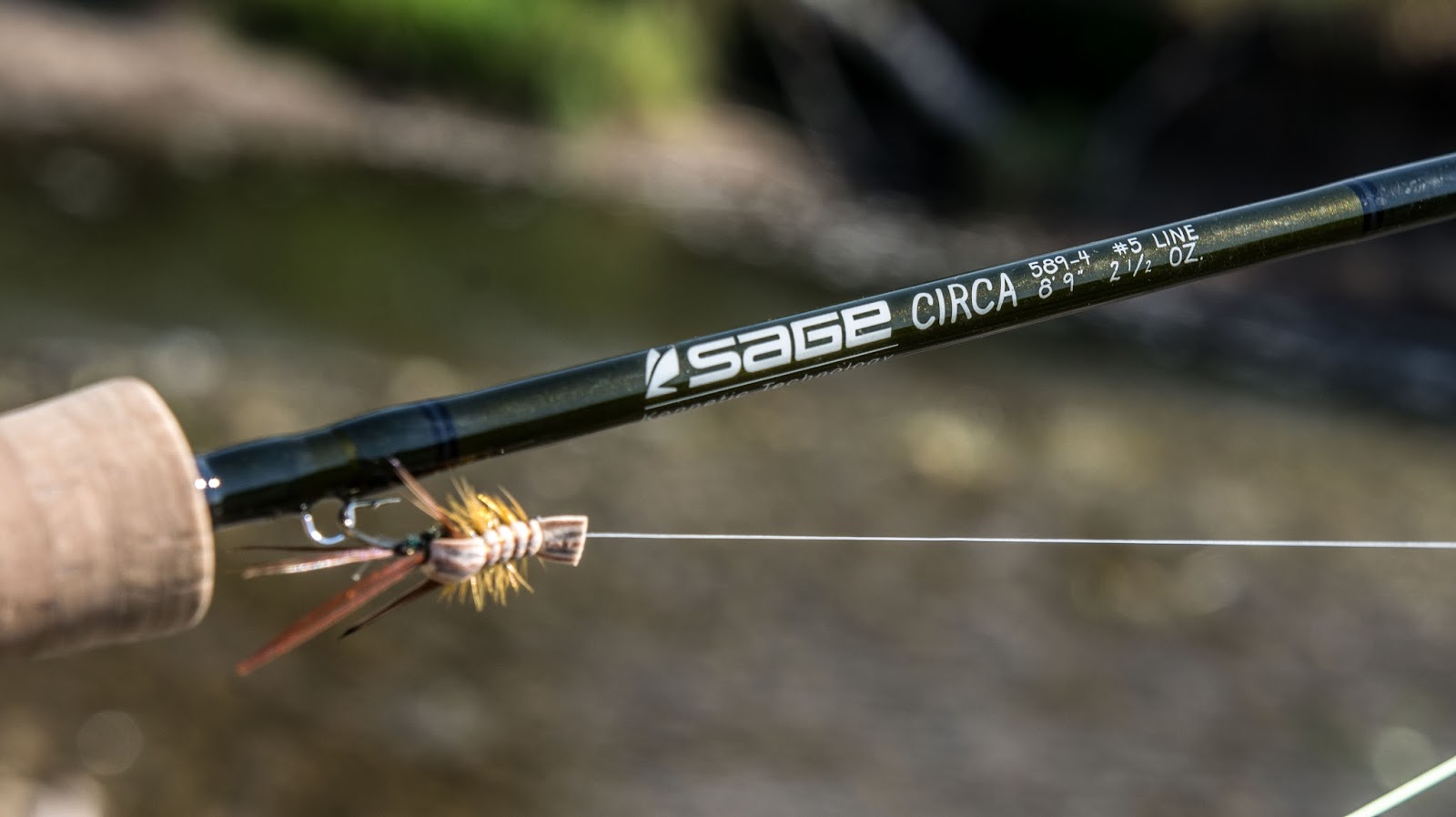
Sage Circa Fly Rod

Having an extremely nice rod for only three weeks, I was momentarily tempted to live amongst the Kaczynskis long-beard-style in the mountains, existing on the trout that my new Sage Circa earns me. Alas that daydream passed, but not so for the pleasure of casting the Circa.


To preface this review: I am a simple man who knows not the fancy lingo and mechanics of fly casting. Shiny reels and expensive rods frighten me. But I can tell you that once I slowed my stroke and shot line, it was an absolute joy to use the super-slow Circa.

I tend to cast fiberglass rods further than graphite, and the graphite Circa was very similar for me. It's smooth and satisfying; super light (2.5 ounces) and thin, lays dries down softly and punches nymphs and streamers with ease. This 8-foot 9-inch 5-weight would make a perfect all-around trout-fishing rod. If you've never cast fiberglass, the Circa will give you an idea. If you have, you might not go back.

My first impression - it was hard to get used to on small, overgrown water (not that this size rod was intended for small overgrown water). Where casting is difficult, I want to cast fast. It's more suitable for medium to big water - this particular Circa.

Fighting fish with it is a hoot, especially decent-sized or otherwise feisty ones. The faux-fiberglass bobs and bends like no graphite I've encountered. It'd double-over without straining, and gave me plenty of leverage against the fish. It's ultra-light so end-of-day arm fatigue and shoulder soreness should be minimized.

I own two old, heavy, fiberglass rods (St. Croix and Wright & McGill - both 7-8 weights) and recently cast a couple modern 'glass rods (a Lamiglas 7-foot 3-weight and a Steffen Brothers 8-foot 4-5-weight). The newer rods were pleasant and fun ('glass has come a long way), but if you're a fan of Sage, I wouldn't recommend anything else.

I would consider over-lining it with 5.5- or 6-weight line as I suspect there's a chance it loads a touch more noticeably. But it casts fine with appropriate line, too.

The deep, sexy bend in the fiberglass Circa in the foreground
compared to the graphite VXP in the background.
Now I'm again thinking about running into the mountains before I have to return it...

UPDATE: I have since purchased my own Circa, and I still love the way it casts. But I am finding Sage rods to be a bit fragile. I now have to send a rod in for repair for the second time this year. The $70 repair fees add up (especially when the service is covered under warranty), and the six weeks without the rod sucks. And waiting 24 to 48 hours to hear back from customer service also sucks. With that in mind, buy Sage rods at your own risk. I'm going to look at Winston for my next go-to rod. 

Sage Click Reel: At first I was confused by the drag. It's very light, and apparently adjustable, but too subtle for this simple angler to notice. It is a click drag system which is designed to only give enough tension to disallow free-spooling of the reel. You make your own drag with your palm, or whatever. Some may like that idea, others not, but it keeps things a little more affordable and adds an element to fishing. I know steelheaders who've used click drag reels, so it must be manageable for trout.
For my taste and others who cast my setup, the drag was just too light. It would let line off when casting heavy flies and would spool a little when manually pulling line off. I get the concept, but I prefer a little more tension than that offered by the Click.

Rio Perception Line: I like that it has loops on both ends so I don't have to enforce any seldom-used knots that add to the overall circumference of my spool. It was a nice, easily-castable high-floating line. It didn't crack or sink within three weeks.
It also has the front and rear tapers of the head and the running line broken down into different colors, providing quick info for a number of different casting and fishing applications.
Rio is promoting the line as: "Built with ultra-low stretch ConnectCore Technology, the RIO Perception lines provide pioneering levels of sensitivity for intuitively better cast timing, easier line lift and sharp, precise mends. Lack of stretch also means enhanced detection of subtle takes and significantly reduced reaction time when setting the hook." It would be hard for me to distinguish what difference the line made when casting and fishing a fancy new rod, but it certainly didn't hurt. Either way, this line on this rod makes a winning combination.

Sunday, August 11, 2013

Sulphur and sage

Yellowstone National Park is a carnival for the senses. The ears ride the quiet of the night, the bugle of the autumn elk, and the swishing of the tumbling river. The nose plays with aromas of sage and odors of sulphur and buffalo shit. The skin likes the cold water that wraps around its legs and the geyser steam that dances upon it. And the eyes trip out on the visual Arcadia - the colors alone can consume the retina. Yellowstone, black canyon, orange slashes, whitefish and rainbow trout, grey wolves, brown bears and red foxes. Blues and oranges of hot springs, browns of mud pots, and azures of rivers and lakes. Every shade of green plus a few proprietary ones. Yellowstone is a gold mine.


We fished the Black Canyon of the Yellowstone River on Friday with family from Duluth. We got most of the fish on Chubby Chernobyls, Humpies, Bloom's Parachute Flying Ant, but Liz successfully manipulated the Woolly Bugger a few times. A few whities, a few rainbows, but mostly cutthroat. I'd go back...


Walked directly through our site, #82, and did this on the adjacent hill...

Not Yellowstone, but the morning after.

Monday, August 5, 2013

When the walk is over...

We said goodbye to an old friend Saturday night - a friend I've known since my first days in Montana almost 9 years ago. He was brave, humble, had a big black tail and a lovable smile. He will be missed by the many who loved him.

My dog and Jake were arch enemies. Memorial day in 2005 camping on Ruby River Reservoir, they had their first encounter that ended in an ugly scene, and they didn't spend much time together afterward. They could smell each other from a mile away. We once walked them together successfully, but soon after they remembered how they felt about each other. We took them to a local trainer, but even the "guru" couldn't keep them separate. My pooch was nearly always the aggressor, and could've learned a thing or two from Jake.

Jake was there when Brady and I first picked up fly rods, and he's been on many fishing adventures. He would try to eat your trout and would run off, and he was the epitome of a good dog.

Here's to ya, buddy. We'll catch up on the flip side.


Saturday, July 27, 2013

fishpond Westwater Guide Lumbar Pack

My mom, bless her heart, recently sewed me a little fishing pack, ala Recycled Waders, made out of my first pair of waders. It fits me, packs well for a hike-fishing, and is well built, especially for a homemade piece. She let me know it was plenty frustrating with the thick Gore material, but she made me a fine piece of unique fishing equipment. If you know a seamster or seamstress - you might politely check if they'd do the same for you in the interest of cost-savings and recycling. If not, there are other options.
Thanks mom! (photo courtesy Jason/Jen Burton)
For example the fishpond Westwater Guide Lumbar Pack, which I also recently acquired.

It has large enough pockets for most day-trippers; is well-built, looks cool, is waterproof (though not submersible save for a quick dip - don't ask how I know) and can be worn either fanny-pack style or over one shoulder and under the other arm (sling-pack style). It'll fit a couple fly boxes, bug spray, sunscreen, water bottle, camera and probably a little more. You can hang your forceps, tippet and nippers from any of the tabs, and your wallet and cell phone will be protected one of the zippered pockets. It also has a net slot that allows anglers to tote a landing net without the PIA magnets or retractors.

It comes in stylish Earthy tones (my fave), and is built with seemingly reliable construction. Waterproof zippers have proven to be a difficult feature to master for some fly-fishing companies, but fishpond seems to have a solid grip on it. They're easy to pull and haven't broken yet.
Liz likes it too.
The only issue I had was that it doesn't like to stay around your waist fanny-pack style unless you cinched it up too tight (maybe it's just certain body types). It works great to wear it slung over the shoulder (see above photo), but then the net slot/pocket became useless as the net falls out. It's a nice feature, but only fanny-pack style.

Liz had some thoughts, too:
Pros:
- It fits everything (fly box, other fishing accessories, water bottle, camera, snack or lunch, rain coat or extra layer, bug spray, sunblock, Chapstick) without being bulky. You could also carry a rod tube or a coat with the straps under the pack.  
- It's prettier than anything other fly-fishing companies make.
- It's like a scarf - so many ways to wear it.
- Plenty of places to clip things, if you're one of those people that likes to clip things. Plenty of pockets to organize stuff too, and there is a little zippered pocket on the inside that is perfect for your fishing license and your keys.
- People will compliment your "sweet pack".
- There are elastics to keep all the various strap ends tucked away. Which is nice because there a LOT of straps.
- You'll catch more fish.

Cons:
- If the upper compression straps are cinched all the way, they block one end of the zipper making it difficult to zip all the way and unzip.
- The waist strap is difficult to tighten while you are wearing it. Much more difficult than the waist strap of my backpacking bag, for example, where the buckle is designed more ergonomically so you can pull the strap ends straight out in front of you. 

Finding $140 in your budget for a fishing pack can be challenging but you only have to spend it once.

UPDATE: It's been a couple of years now, and this is still my go-to back for day-trips on the river. I like its size, durability and how it fits on me. I haven't abandon it for another piece because it's great. 

Monday, July 22, 2013

How to catch golden trout

Also featured in the Flyfisher's Guide to Southwest Montana's Mountain Lakes

How do you catch golden trout? The same way you catch any other trout, except that you usually have to try harder.
There is consensus that they are not dumb (internet forums, fishing friends, and the guys at the lake with us), and in my experience, they only like your fly once. Then the trout go away for awhile and comeback savvier, having convened with their brethren about what is actually food. This constant evolution is impressive, making this gorgeous quarry even more special.


The first challenge in catching golden trout is determining which lakes hold them. In Montana, that's not terribly difficult through the MFISH database. Some popular destinations are Lightning Lake, Cave Lake, the Hidden Lakes (Gallatin Range) and the Golden Trout Lakes. In Wyoming, however, they don't offer stocking records on their website. Particularly in the Wind River Range, lakes that hold goldens are often valuable hushed-up local secrets. A good Googling can help, but befriending a Wyomingite is most helpful. Elsewhere, I don't know.

We caught this guy at code-name Gazed Acids Lagoon. Traveling sedges were the dominant hatch and the trout were eating them.
The second challenge is getting there - it basically always requires a high-elevation uphill hike. Golden trout rarely live below 9,000 feet and there aren't many roads that high. Some hikes are harder than others - the trek to Lightning Lake (one of the most popular destinations for goldens) is notoriously ridiculous.
The final challenge is getting them to eat. You'd probably guess that they're easy-ish to catch since they get fished relatively sparsely, but that is not the case. Throw the box at them until you find something that works, then throw the box at them again until you find something else. I've heard of people catching them on Muddlers, scuds, midge larvae, and I've only ever caught them on dry flies -the Goddard Caddis and Bloom's Parachute Flying Ant.

As the heat continues, mountain lakes become inviting options. They're great for exercise and scenery, and rare fish like goldens, pure-strain cutthroat, and grayling. Catching a golden trout is something most fly anglers will never do, so it's always an honor to have one in the net. Go while you can!

Cruisin' on a Saturday afternoon.
Thursday, July 11, 2013

Pep talk

Fly fishing is hard. Take it from me - the most mediocre fly angler in the world. I'm rarely even the "best" angler in my party (best being subjective and irrelevant, but humor me...). But I love it.

I've had moments (months, in fact) when I've felt inadequate about my skills, because I write about fly fishing. I better be able to do it well if I'm going to be telling people about it. Mercifully, I got over that. I feel as though I know the sport and industry well enough to (hopefully) write insightfully, and take worthy, maybe even sometimes poignant, photos. That's my role in this universe, and even though I can't get every fish to eat (or any, sometimes), that doesn't mean I can't relate to others, or have nothing to say.


Fly fishing is frustrating. I've introduced enough people to the sport in the last few months that I've started emphasizing one thing in particular: You will get frustrated. Because catching a trout on a fly rod is the result of the confluence of about 10 different things, not all of which are under your control. But if you enjoy the experience enough, you'll go back. And back. And eventually you'll catch a fish, and you'll be the happiest person in the world. And you'll go back more often and eventually - you're bona fide. But if you can't trudge your way through those initial frustrations, you'll never get to the point where it starts becoming less frustrating and more fun.

Some common frustrations:
  • Rat's nests
  • Back cast gets caught in a tree
  • Cast won't go where you want
  • Cast collapses
  • Can't catch fish
  • Line gets snagged on everything it possibly could  - boots, clasps, sticks, rocks, tippet, etc.
  • Getting hung-up on the bottom
  • Losing flies (bull-whipping the back-cast, hanging up on the bottom, etc)
  • Turning ankles on river rocks
  • Slipping/ falling
  • Flies come untied
  • No idea what flies to use
  • General lack of confidence
  • Others catch fish while you're not (sometimes with the same rod/reel, fly set-up, indicator depth, drift, line, hole, mends, etc. Either some people are magic, or subtle nuance makes a difference. I think magic.)
  • Sore back/shoulder/arm/leg/ankle/brain
  • Everything else
I still get frustrated. That may never go away. Hell just yesterday I tried to fish the East Gallatin with my dog on a public stretch in Bozeman. I lasted about 15 cuss-filled minutes - my poor dog, mean-tempered as he can be, must be traumatized. 

To all those anglers feeling like giving it up, feeling like they suck, or everyone else is better at it, or just generally worn out of it; take solace and have patience with yourself. Try to focus on the good parts of your day - the beautiful place you otherwise wouldn't have been; the exercise you got; the sunshine and fresh air you absorbed; the progress you made or insight you learned. If those things are not enough, you indeed may not have what it takes to be a fly angler. 

All of us were there at some point, and all of us still have frustrations (some of us even admit it). Fly fishing is hard, and eventually, worth the trouble.


Monday, July 8, 2013

Float beer

Float beer, sometimes called yard beer, is what anglers call cheap, light brews that are well-suited for a summer float. Everyone has their favorite, but there are a few that seem particularly popular. Whether you're out with friends or fishing with a guide, a suitable beer goes hand-in-hand with fishing.

Some criteria for a float beer:
  • Light. Thick, dark beer does not suffice on sun-drenched, August afternoons. Or sun-drenched April mornings. You might want a darker beer for that annual January float, but you might just prefer toddy then. 
  • Low-alcohol. You're gonna drink many to keep you cool, and you don't want to be too besotted before you take out and drive home. Or you're a passenger, in which case disregard this one. I have knocked people out of the boat while rowing after high-fiving Jim Beam and I'm still taking shit. Avoid this. 
  • Inexpensive. You're not going to be savoring flavors anyhow, why spend the money?
  • Comes in cans.  Cans are easier to dispose of (and recycle around here), they stack nicely in the cooler and are crushable when it's over. 
  • Drinkable. Many beers that would otherwise qualify, taste bad. Avoid this. 
Some, reviewed:

Bud Light Lime (4.2% abv): This has apparently become a favorite of the anglers at Simms Fishing Products, and twas they who introduced me. It fits all the criteria, and doesn't taste as terrible as you might've heard. Actually, it's kinda good.

Deschutes Brewing River Ale (4% abv, 28 IBUs): This one got me excited initially, but it comes in bottles, is micro-brew priced, and the taste isn't good enough to overcome that. But if you want to be fancy, give it a shot.

PBR (4.73% abv): Most people's favorite, but I stand by my claim that most people drink PBR cuz it's hip (though I bought a couple sixers earlier this year, because of other factors). After acquiring the taste it flavors decent enough, is cheap, light-enough and comes in cans. Hard to go too wrong, but for my money there are better options.
PBR is common, though not my favorite.
Maddy Light (4% abv): (Almost) the least distributed beer on the list - you have to fill a growler at the Madison River Brewing Company's taproom to bring this in a boat. But it's darn tasty, light, crisp and satisfies the criteria as well as any. But drinking from a cup while bobbing downriver is far from ideal.
Not ideal, but doable. 
Great Falls Select (unknown abv, but sessionable): Also relatively undistributed, this beer works well. It's priced in between PBR and microbrew-pricing, is tasty, light, and generally satisfying. If you're local beer-outlet stocks it, I recommend it.
Though not widely available, GFS is a favorite of mine.
Two-Tenths Brewing Company Floating IPA (~3.54% abv; name subject to change): This is Liz-and-my first-ever homebrew. It's an IPA, but apparently got a bit diluted as the alcohol content will probably be low (it's still fermenting, but the initial gravity was low). The dilution should help it meet at least a couple criteria, and make it a suitable float beer, which was our intent ;) Extremely rare.

And here's another list of "cheap" beer that might give you some guidance.

My list is incomplete and regional  - tell me what I missed. When I float your rivers, what beer should I pack?

Tuesday, July 2, 2013

Nearly driftless

"Depending on conditions" is a popular caveat around here - conditions being anything from fishing pressure to flow rate, clarity, hatch activity, road conditions, accessibility, et cetera. Oh and weather.

If you fish outside, you're aware of the role of weather. Especially if you are planning a trip, and especially if that trip is to a location with extreme weather, you better load up forecast.weather.gov. As a matter in fact, Liz and I witnessed the impact of extreme weather on our recent trip to the Driftless.


We were able to find fishable water by the end of our week-long trip, about six days after 7 to 8 inches of rain fell around Decorah, Iowa, causing flooding and dark-chocolate water. Our plans for lots of exploring were thwarted, wading wasn't easy, the water wasn't see-through, and the wind wasn't absent.

Most of the streams here are small and overgrown, but the water isn't tricky to read. The trout we found were small, but there is some natural reproduction and a few brood stockers. Rolling hills, lush greenery, and thick humidity distinguish the Driftless from the West, but the trout fishing is reminiscent.

Decorah is worth visiting, and the nearby fisheries are not necessarily the bland, cookie-cutter-stocker-filled waters about which you just read. We consulted a couple of friends who spoke highly of the area, and while there, stopped at the Highland General Store where a small box of film prints revealed big trout (the shop also had a selection of well-tied flies, fly lines, leaders, tippet, et cetera). Ethan and Jason at Northeast Iowa Flyfishing Guide Service kept us apprised about access laws and conditions - they are fishy folks who undoubtedly know where the big ones lie.


Between the trout, we camped at free public streamside sites ablaze with fireflies, met and caught up with family, dined at some old favorites, sampled the local drafts and even witnessed a brief aurora in southern Minnesota. Despite conditions, it was a fantastic trip.


Upon our return to Montana, we appear to have entered the nothing-but-90s-and-sun period of our season. Hopefully we haven't missed the day or two of fishable post-runoff pre-hoot-owl fishing (if that occurs this year) on some favorite rivers. Depending on conditions, we'll find out soon.

Monday, June 10, 2013

Runoff Fly Tournament: The Champion

In the lamest of all wins, the venerable Woolly Bugger wins. Congratulations to Carl Blessing and his famous creation; and to Duke, the Yankees, and all other perennial favorites. Next time, I'll pick more interesting flies.

Tuesday, June 4, 2013

Gently down the stream

Drift-boat-style rowing is not as easy as I thought. I've knocked friends out of boats, spiraled back to the ramp on stillwater, and embarassed myself otherwise...
Photo courtesy Ben Pierce
Practice and muscle memory are necessary to overcome the counter-intuitivity of the "drift-boat stroke". Understanding how to read water (float-read, not fish-read) helps, but does not make rowing second nature on your first trip. Liz, for example, is an experienced kayaker who knows which lines to take, how to approach hairy stuff, how moving water reacts to paddle strokes, etc., but admitted it wasn't completely natural to turn the raft. It's sort of akin to learning to back a trailer; go slow, and if you turn wrong, do the opposite (hopefully there's time). Above all, stay calm and carry on; eventually the boat will do what you want. And, as everyone told me, you have to push the boundaries of your comfort level to improve. Check (with aplomb, if a little horn-tooting is allowed).

We floated a small, cliffy river that's only runnable during runoff. It was about the lowest flow we were told floating's possible (well below the 25th percentile), so there was plenty to avoid.We figured it was pretty regularly Class II, up to II+ at the narrower spots.

Calluses peeled from the trunks of my fingers by Saturday night; pouring a little beer over my endorphins had me floating again quickly.

We swiped some branches at a couple points, but that was as hairy as it got. I put us front-first through some gurgling tongues as I wanted, and now feel ready to take on some new water.

It was a tremendous weekend replete with good friends, spectacular aurora borealis, the float, and a rainy hike to the Devil's Glen. None of the water was super fishy, but everyone caught trout on flies, everyone charted new Earth, and everyone had a memorable experience. Merrily, merrily, merrily, merrily...


Monday, June 3, 2013

Runoff Fly Tournament: The Championship

No Cinderellas here: it's the Woolly Bugger versus the Elk Hair Caddis in the final of the 2013 Runoff Fly Tournament. Vote now!

Thursday, May 30, 2013

No limit

The limit on non-native fish in Yellowstone National Park has been quashed in an advanced effort to preserve native fish. This applies to all park waters, except the Madison and Firehole rivers, the Gibbon below the falls, and Lewis and Shoshone lakes. Additionally, rainbows and brookies in the Lamar Drainage (including Slough and Soda Butte creeks) must be harvested, similar to the mandatory-kill-of-lake-trout rule in Yellowstone Lake. Bring your lemon juice.

Monday, May 27, 2013

Runoff Fly Tournament: Round 3

The Hare's Ear, a prognosticator favorite, is out, and the Morrish Hopper has made the final four in the Cinderella story...


Monday, May 20, 2013

Just one fish

For my mentee's 7th and most recent birthday, he acquired the tried and true Zebco 220 rod/reel combo, so we've been fishin'.
When the focus is there, it's strong. When it's gone, it's gone.
But with his 7-year-old attention span, we need to catch fish. Any kind or size of fish. We are currently at about a code red with lack of fishing interest - we haven't caught anything in almost four total hours of fishing. This does not compete with Plants vs Zombies.
We attended the annual Bozeman Kids' Fishing Day at the East Gallatin Recreation Area on Saturday. Despite some serious combat fishing with rambunctious youths whipping their worms a various angles into the pond, it was fun. And folks were catching fish - yellow perch, largemouth bass, and the recently stocked 12-inch rainbow trout. Just not us.
Worm whippin'.
"Another one!" could be heard from time to time down the elbow-to-elbow shore, and our frustration level grew. While it was a good opportunity to teach patience, that you cannot win them all, and that fishing isn't always about catching, it also makes fishing seem like a futile waste of time to a young man who hasn't had the experience of a good fishing day.
So hopefully the fishing gods will bless us with something - anything - soon. Lest we cultivate another kid who would rather sit in front of a glowing rectangle than a river.
I'm sure there's good advice out there - let me know how you keep your kids interesting in fishing. Please.

Runoff Fly Tournament: Round 2